
Historic Grandeur at a Price That Stops You Cold
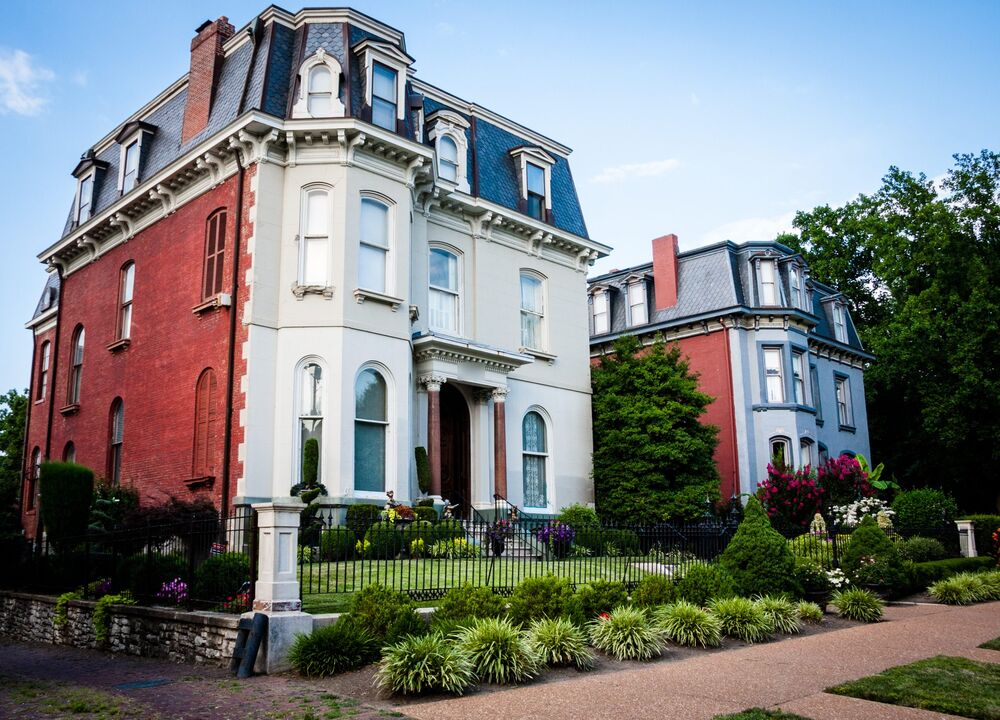
Here’s the thing that makes people do a double-take when they first visit St. Louis: the housing stock. We’re talking about streets lined with Victorian painted ladies, Romanesque Revival townhouses, and Gilded Age mansions with Tiffany windows and hand-carved mahogany staircases — homes that would run you $2 million in Chicago or $4 million in San Francisco. In St. Louis, you can still find a meticulously preserved 3,000-square-foot historic home in a leafy, gaslit neighborhood for under $500,000. For young professionals starting out, that means affordable historic flats and loft conversions in places like Soulard or Lafayette Square. For families and mid-career executives, it means grand four-squares and center-hall colonials in Compton Heights or the Central West End, with architectural detail that simply doesn’t exist at these price points in most American cities.
Milwaukee has its own historic charm — the cream-city brick bungalows of Bay View and the stately lakefront homes of Whitefish Bay are genuinely lovely. But the sheer concentration of high-style Victorian and Gilded Age architecture available in St. Louis at prices unthinkable elsewhere is one of the top reasons people move here.
By the Numbers
| Metric | St. Louis | Milwaukee |
|---|---|---|
| City population | ~281,000 (2024) | ~561,000 (2024) |
| Metro population | ~2.8 million | ~1.6 million |
| Median home price (city) | ~$260,000 (late 2025) Redfin | ~$225,000–$235,000 (2025) PAM MKE |
| Median rent (city) | ~$1,250–$1,300/month Realtor.com | ~$1,160–$1,195/month Apartment List |
| Median household income | ~$55,000 (city) | ~$49,000 (city) |
| Violent crime rate (per 100k) | Elevated; homicides down 45% in early 2025 City of St. Louis | Elevated; both cities rank high in FBI data |
Where St. Louis Wins
Free cultural institutions on a scale that’s genuinely rare. The Saint Louis Zoo, Art Museum, Science Center, and Missouri History Museum — all housed within the 1,300-acre Forest Park — charge zero admission. That’s not a promotional offer; it’s the permanent reality, funded by a regional tax district Forest Park Forever. Milwaukee has excellent museums, but its major institutions like the Art Museum, Public Museum, and Discovery World charge admission. For a family of four, a year of weekend museum visits in St. Louis costs nothing.
More house for the money, especially at the high-character end. While both cities are affordable by coastal standards, St. Louis’s historic housing stock delivers architectural drama — turrets, stained glass, pocket doors, original millwork — at prices that feel like a typo. The metro area median for residential homes sits around $340,000 St. Louis REALTORS, and within city limits you can still find grand historic homes well under $400,000.
Lower state income tax, and it’s still falling. Missouri’s top income tax rate dropped to 4.7% in 2025 and is on a path toward 4.5% Tax Foundation. Yes, St. Louis city residents pay a 1% earnings tax — but that was just renewed by voters in April 2026 St. Louis Business Journal, and many metro residents avoid it entirely by living and working in St. Louis County.
More nonstop flights. Lambert Airport serves roughly 65–72 nonstop destinations, including seasonal European service FlySTL. Milwaukee Mitchell offers fewer nonstops, and many travelers end up driving 70 miles to Chicago O’Hare for long-haul connections Mitchell Airport.
Milder winters. St. Louis summers are hot and humid (average July high around 89°F), but winters are relatively mild with occasional ice and snow. Milwaukee winters are long, cold, and snowy — average January lows around 16°F with roughly 50 inches of annual snow, plus lake-effect weather that can drag spring out well into April.
Top-tier magnet schools in the city. Metro Academic and Classical High School, a St. Louis Public Schools magnet, ranks #22 nationally and #1 in Missouri U.S. News. Elite suburban districts like Clayton and Ladue consistently rank among the state’s best.
Where Milwaukee Wins
The lakefront is spectacular, and it’s right there. Lake Michigan gives Milwaukee beaches, sailing, and a shimmering freshwater coastline within city limits. Veterans Park, Bradford Beach, and Lakeshore State Park are free and genuinely beautiful. St. Louis has no comparable waterfront; its outdoor identity centers on Forest Park and the Ozark rivers, which require a drive.
A surging job market for young professionals. The Wall Street Journal and LinkedIn identified Milwaukee as a top metro for young-professional hiring, with strong growth in manufacturing, financial services, and health care Milwaukee Region. St. Louis has major employers — Boeing, Centene, BJC HealthCare — but its young-worker labor market has softened St. Louis Fed.
Summerfest and festival culture. Summerfest is one of the world’s largest music festivals, and the lakefront festival grounds host ethnic and cultural festivals all summer long. Milwaukee’s beer culture — Miller, Lakefront, and the broader Wisconsin brewing tradition — is deeply woven into daily life.
An NBA team and a walkable core. The Bucks’ 2021 championship and the Fiserv Forum have energized Milwaukee. The city’s core is more compact and walkable than St. Louis’s, with the Third Ward, Water Street, and Brady Street clustering nightlife and dining in a way that feels cohesive.
Wisconsin’s open-enrollment system. Milwaukee Public Schools face significant challenges, ranking near the bottom of Wisconsin districts with an average ranking of 1/10 Public School Review. But Wisconsin’s open-enrollment system allows families to apply to highly rated suburban districts like Whitefish Bay, Elmbrook, and Mequon-Thiensville without necessarily moving.
Cooler summers. If you wilt in heat and humidity, Milwaukee’s average July high of 81°F — with lake breezes — is a genuine quality-of-life advantage over St. Louis’s 89°F and soupy humidity.
Pick St. Louis If…
- You want maximum cultural bang for zero dollars — free zoo, art museum, science center, and history museum, every day, forever.
- You’re drawn to historic architecture and want a Victorian or Gilded Age home with original detail at a price that feels like a different century.
- You’re a mid-career executive who can live in a top suburban school district (Clayton, Ladue, Kirkwood) while earning a St. Louis salary and potentially avoiding the city earnings tax entirely.
- You want more nonstop flight options and hate connecting through Chicago.
- You prefer milder winters and can tolerate hot, humid summers.
- You work in healthcare, defense/aerospace, agtech, or financial services.
Pick Milwaukee If…
- Lake Michigan’s beaches, sailing, and waterfront lifestyle are non-negotiable for you.
- You’re a young professional seeking a hot job market with strong hiring momentum in manufacturing, fintech, or insurance.
- You want an NBA team, a walkable core, and a festival calendar that runs all summer.
- You prefer cool summers and don’t mind long, snowy winters.
- You’re willing to use Wisconsin’s open-enrollment system to access top suburban schools while living in the city.
- You work in manufacturing, fintech, insurance, or brewing and food production.