
The Numbers at a Glance
| Metric | St. Louis | Cleveland |
|---|---|---|
| Metro population | ~2.8 million | ~2.06 million (2023) |
| City median home price (2026) | ~$260,000–$261,000 Redfin | ~$146,000–$150,000 Redfin |
| Median 1-bedroom rent (2026) | ~$1,000–$1,050 Apartment List | ~$835–$1,250 Apartment List |
| City median household income | ~$53,374 Census Reporter | ~$43,383 Census Reporter |
| Homicide rate (city proper) | 51.3 homicides per 100,000 SafeHome | 28.3 homicides per 100,000 SafeHome |
Where St. Louis Wins
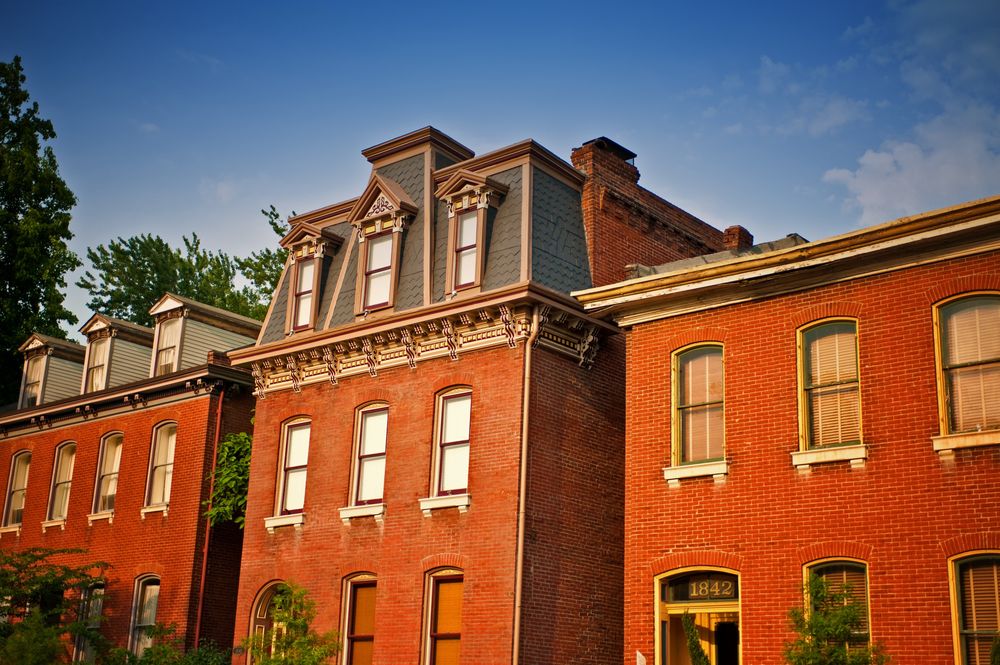
The historic housing stock is the headliner. St. Louis offers Victorian and Gilded Age mansions, Second Empire townhouses, and brick Italianate flats at prices that would be unthinkable in coastal cities — and even beat most Midwest peers on square-footage value. A fully restored 3,000-square-foot historic home in a neighborhood like Tower Grove East or Lafayette Square often lands in the $400,000–$600,000 range. In Cleveland, comparable historic stock exists in Ohio City and Tremont, but the sheer volume and variety of St. Louis's 19th-century architecture — from Soulard's row houses to the Central West End's mansion-lined private streets — is on another level.
Free cultural institutions are a genuine standout. Forest Park's 1,300 acres house the Saint Louis Zoo, Art Museum, Science Center, History Museum, and the Muny outdoor theater — all with free general admission (the Muny offers free seats in addition to ticketed ones), funded by the Zoo-Museum District property tax Explore St. Louis. Cleveland's Museum of Art is also free and world-class, and the Metroparks system is vast, but St. Louis packs an unusual number of free, major institutions into one park.
Air connectivity is a clear advantage. St. Louis Lambert International offers ~64 nonstop destinations, including British Airways service to London Heathrow (launched April 2026) and upcoming Icelandair service to Reykjavik (May 2027) FlySTL. Cleveland Hopkins has ~43 nonstop destinations, all domestic plus Cancún and Toronto — no transatlantic nonstop Cleveland Airport.
Winters are dramatically milder. St. Louis averages 15.5 inches of snow per year; Cleveland averages 54 inches, much of it lake-effect BestPlaces. If you don't want to shovel for five months a year, the difference is real.
The metro area is significantly larger. At ~2.8 million people, St. Louis supports a broader job market, more nonstop flights, and a deeper bench of big-city amenities than Cleveland's ~2.06 million. St. Louis also claims 8 Fortune 500 companies (including Centene, Emerson Electric, and Reinsurance Group of America) plus major private employers like Enterprise Holdings and World Wide Technology Reddit r/StLouis.
Where Cleveland Wins
Housing is dramatically cheaper — and that's a legitimate edge. Cleveland's city median home price of ~$146,000–$150,000 in 2026 is roughly $110,000 below St. Louis's Redfin. Both are far below the national median of ~$420,000, but Cleveland is one of the most affordable major cities in America, period. Numbeo estimates Cleveland's overall cost of living (excluding rent) is 9.8% lower than St. Louis Numbeo.
The job market is surging right now. In the first half of 2026, Cleveland led all Ohio metros in employment growth, with unemployment at just 3.5% vs. 4.2% nationally NEOtrans. St. Louis County sat at 4.2% unemployment in August 2026, and one analysis ranked the metro 35th out of 35 peer metros in employment growth USA Facts. Cleveland's Fortune 500 roster is deep: Progressive, Sherwin-Williams, Parker-Hannifin, Cleveland-Cliffs, Goodyear, and more — 11 in Northeast Ohio WKYC.
Population and "brain gain" trends favor Cleveland. The metro area grew 0.67% in 2026, driven by international migration and an influx of college-educated adults Cleveland.com. St. Louis City lost over 21,000 residents from 2020–2024, though the metro stabilized with international immigration Civitas STL.
Outdoor access is a decisive win for Cleveland. Lake Erie provides beaches, boating, and a growing lakefront trail network. Cuyahoga Valley National Park sits about 20 miles from downtown. The Cleveland Metroparks "Emerald Necklace" spans 25,000+ acres with 300+ miles of trails Cleveland Metroparks. St. Louis has Forest Park and Tower Grove Park as urban gems, but the Ozarks require a 1.5–3 hour drive.
Cleveland has the NBA and NFL. The Cavaliers and Browns join the Guardians to give Cleveland the full Big Three major-league lineup. St. Louis counters with the Cardinals, Blues, and MLS's CITY SC — but lacks pro basketball and football.
The Tax Picture
Both cities impose municipal income taxes on top of state taxes, but the burden shifts depending on income level:
- St. Louis: 4.7% top state rate (Missouri, 2025) + 1.0% city earnings tax = 5.7% combined for city residents MO DOR · Indinero
- Cleveland: ~3.99% top state rate (Ohio, 2025) + 2.5% city municipal tax = ~6.49% combined for city residents CCA Ohio
At the top end, Cleveland is slightly higher. At middle incomes, Ohio's more graduated brackets can make Cleveland the lighter touch. Both are moderate by national standards.
Safety: Context Matters
Both cities post elevated violent crime rates within city limits, driven by concentrated poverty. St. Louis's homicide rate (51.3 per 100,000) is significantly higher than Cleveland's (28.3) SafeHome. However, crime is heavily concentrated in specific neighborhoods. The areas where most young professionals and families live — Central West End, The Grove, Ohio City, Tremont — have rates far below citywide figures. Metro-area crime rates are dramatically lower than city-proper numbers in both cases, a distortion amplified by St. Louis's independent-city boundary, which excludes the safer suburbs from its statistics.
Pick St. Louis if…
- You want a historic home with architectural character — a brick Victorian in Tower Grove East, a Soulard row house, or a Central West End mansion — at a price-per-square-foot that still feels like a discovery.
- Free, world-class museums and a top-tier zoo in one massive park matter to your daily quality of life.
- You prefer milder winters with a fraction of the snow.
- You're in healthcare, biotech, agtech, or financial services (BJC/WashU, Centene, Edward Jones, Bayer).
- You want nonstop flights to Europe and more domestic destinations.
- You're an MLS fan or want a city with deep baseball history.
- You prefer a larger metro with more distinct, character-rich historic neighborhoods.
Pick Cleveland if…
- You want the absolute lowest home prices and rent of any major Midwest city — your dollar stretches further on housing than almost anywhere else.
- You're in manufacturing, insurance, or healthcare (Cleveland Clinic, Progressive, Sherwin-Williams, Parker-Hannifin).
- Lake Erie weekends — beaches, boating, a national park about 20 miles away — sound like your ideal lifestyle.
- You want an NBA and NFL team in town.
- You prefer cooler summers and don't mind serious winter snow.
- You're encouraged by a city demonstrably turning a corner on population and job growth.
- The Rock & Roll Hall of Fame, a world-class orchestra, and Playhouse Square (the largest performing arts center outside NYC) are your kind of cultural anchors.